A House Gives You Hours. A Van Or Camper Gives You Minutes.
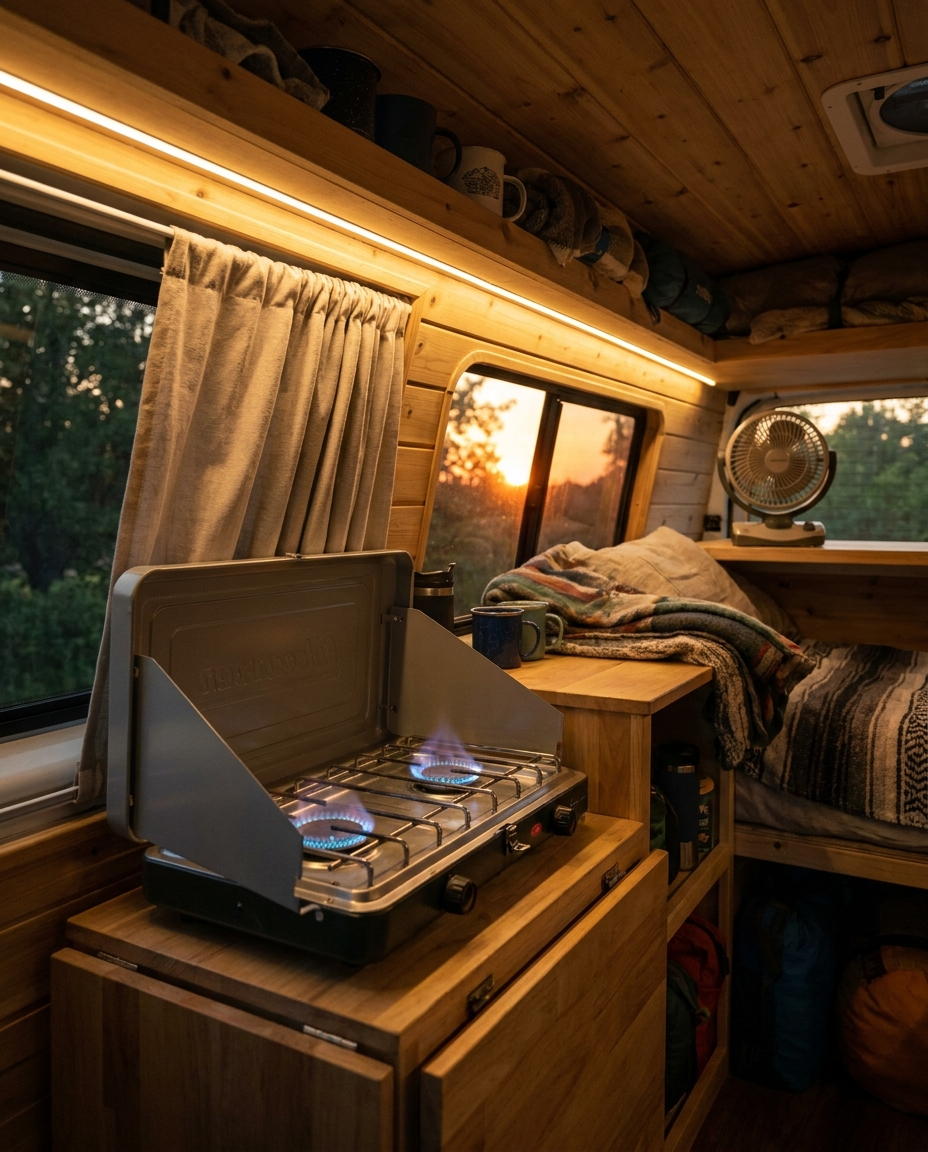
The same propane leak that takes hours to get dangerous in a house gets dangerous in a van, a caravan or a motorhome before you finish a dream.
It's the same stove. The same heater. The same generator everyone warns you about. What changes when you move into an RV is not the leak — it's the room around it.
A house has two thousand square feet for a leak to spread thin. Your van has eighty. A small caravan or Class B motorhome — barely more.
Same gas. One-twentieth the air. And the windows shut tight for the night — against insects, for privacy, or because the AC is running.
The danger was never the leak. It was always the math.
The math nobody on YouTube does for you.
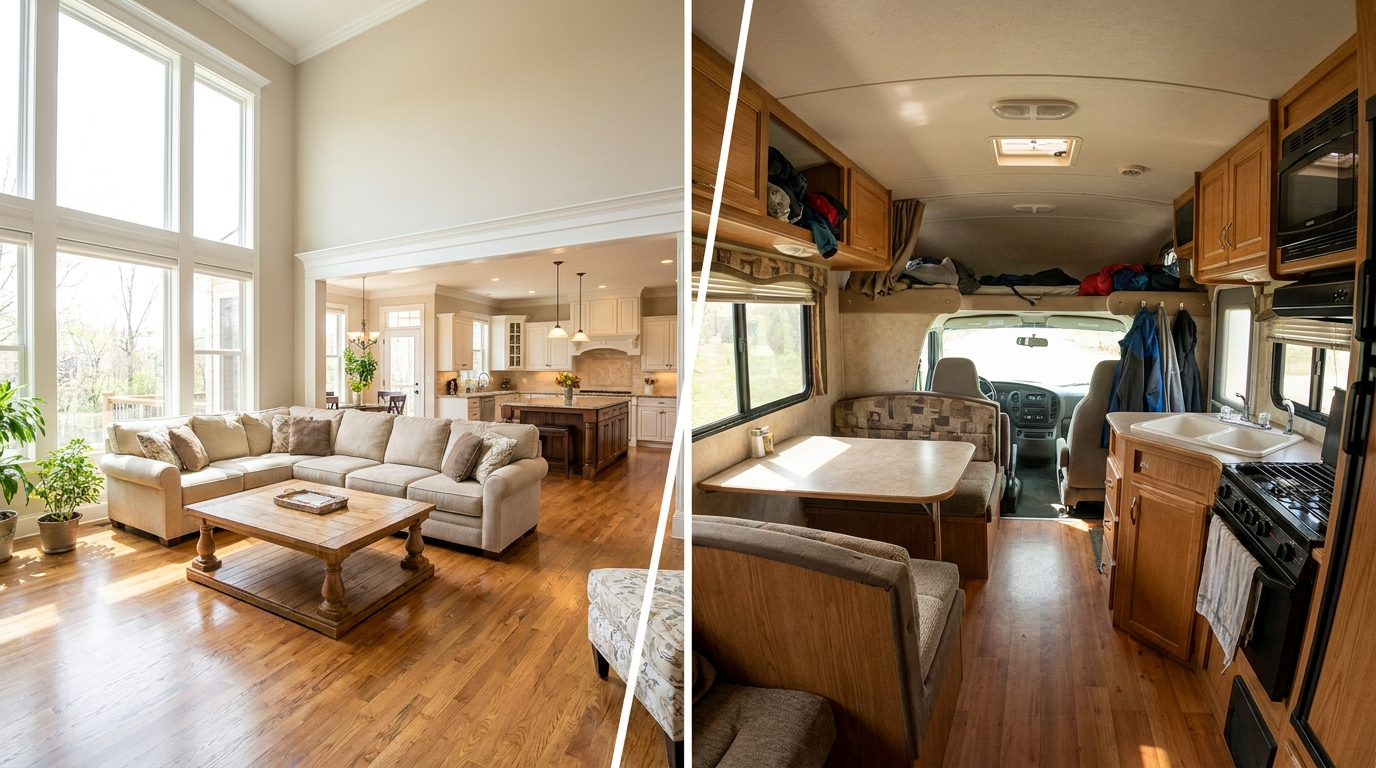
Same gas. Same window. Twenty-five times less air to dilute it.
Take a back-of-the-napkin number every HVAC tech knows by heart: a typical American living room holds about 2,000 cubic feet of air. A standard high-roof van conversion? Around 80 cubic feet of usable air space once you account for cabinetry, the bed platform and gear. A travel trailer or small Class C motorhome? Larger than a van — but still a tiny fraction of a house. The math doesn't change camps.
You're not exaggerating the risk when you do that math. You finally see what your nose has been hiding from you.
Two real stories every van, caravan and camper owner should read once.
This isn't fearmongering. These are from people who survived to type it.
"Within 30 seconds my head started to get extremely itchy, like I was itching my ears so badly they started bleeding." — Reddit r/VanLife (vanlifer describing CO symptoms after closing the door during propane cooking)
"My lungs just wouldn't work." — Reddit r/Appliances (first-time propane stove user, indoor leak)
The pattern is identical in both stories: the appliance was the same as a million homes. The difference was the volume of the room. The wall was twenty feet away in one. The wall was three feet away in the other.
And the door — that thing you closed for the night, for whatever reason — turns the math against you faster than any of us want to think about.
The bip is too late. You need the number.
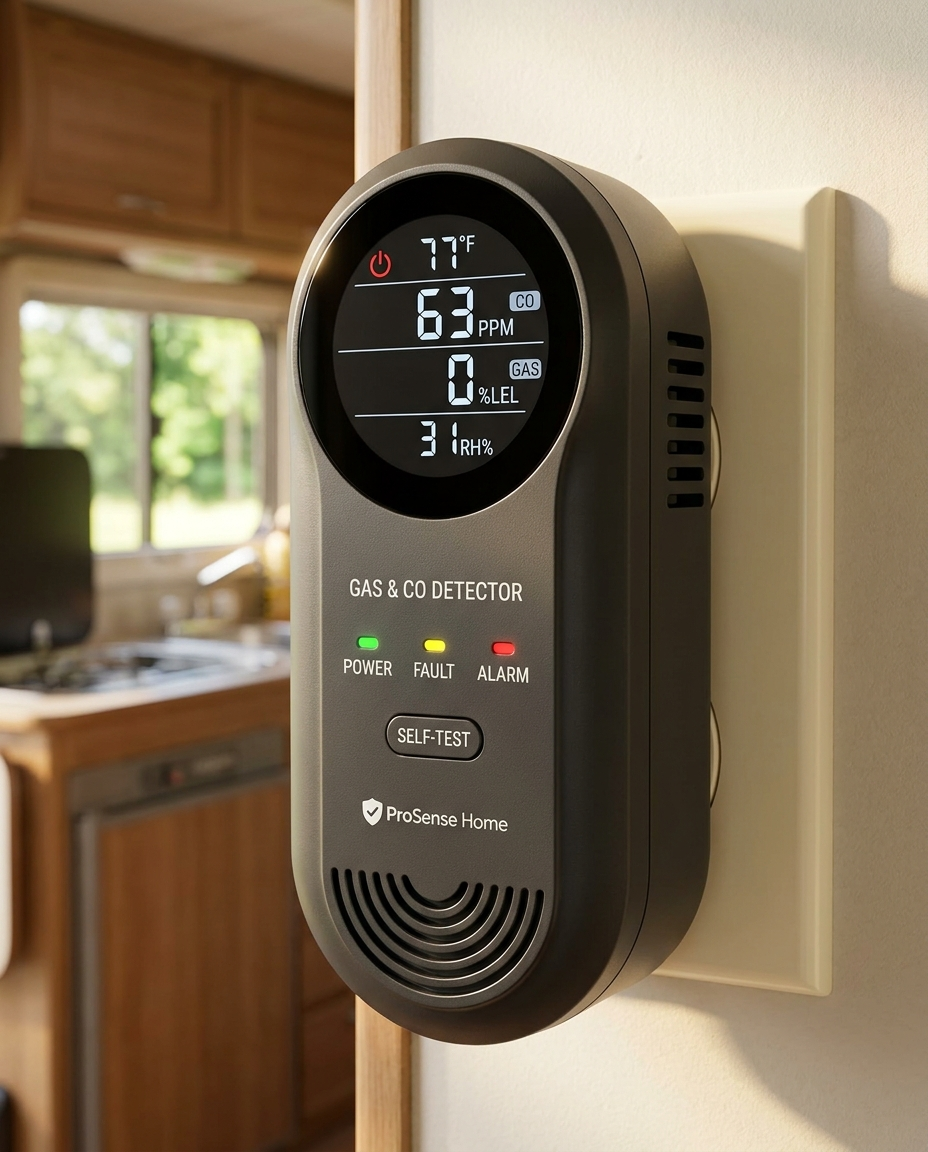
ProSense Home plugged into an RV outlet. The display reads live — you see 8 PPM, 14 PPM, 23 PPM long before any standard alarm wakes up.
Here's what most RV CO detectors do: they sit silently with a green LED, and they bip once you hit 70 PPM. In a 2,000-cubic-foot house, that bip leaves you 30 minutes to react. In an 80-cubic-foot van or caravan cabin, that bip arrives while you're already asleep.
The problem isn't the alarm. The problem is the threshold.
What you need is a screen that shows you the number going up. 5 PPM, 9 PPM, 17 PPM, 31 PPM. You see the climb. You crack a window. You don't wait to be woken by an alarm that, in your volume, might be too late.
That's the whole reason ProSense Home exists. It's not another CO bipper. It's a continuous live readout for four threats at once: CO, natural gas, propane, and temperature — visible from 0 PPM, in real digits, plugged into any standard outlet.
| What you get | Basic RV CO Detector | ProSense Home |
|---|---|---|
| Shows live PPM number from 0 | ✗ | ✓ |
| Detects CO + natural gas + propane | CO only | ✓ (4-in-1) |
| UL 2034 + ETL Listed | Most: yes | ✓ |
| Plug-in, 30-second setup, no tools | Hardwired or battery (varies) | ✓ |
| Visual confirmation it's still alive | Green LED (stays on even if sensor dies) | Live digits scrolling |
| Catches a leak before the bip threshold | Bips only at 70 PPM+ | ✓ (see 8 PPM, 14 PPM rising) |
Get the number. Not the bip.
Plug ProSense Home into your van, caravan or motorhome and see what your air is actually doing — tonight.
See The Detector →"I never thought of my van as a fuel tank. Then I did the math."

"I'd been full-time in my Sprinter for 18 months and never thought twice about the propane stove. Then a buddy told me about the volume math. I plugged in ProSense Home the same week. One summer morning — after a night with the doors closed and the gennie running for the fan — I watched it climb to 12 PPM before I even noticed a smell. I cracked the roof vent and it dropped back to 0. The bip-only detector I had before? Would never have triggered. I'd just have woken up with a headache and called it a bad night's sleep."
"We've had our travel trailer for twelve years. Propane fridge, propane water heater, propane stove. Three appliances I never thought about all running while we sleep with the windows shut against mosquitoes. I plugged ProSense Home in next to the dinette and within the first week I watched the number tick up to 18 PPM one morning before the AC kicked in and cleared it. Twelve years of getting lucky. I bought three more — one for each of my kids' campers."
"If you cannot smell propane you need flammable gas detectors in every room that has gas. This is the same in an RV — except 'every room' is just one and you sleep in it."
"But I already have a CO detector."
You probably do. Most RV owners do — either the cheap battery one mounted at ceiling height, or the one that came hardwired by the converter. Two things to know:
1. It only watches CO. Propane and natural gas pass right by it. A propane leak from a stove valve, a regulator or a fridge can fill an 80-cubic-foot cabin to 25% of the lower explosive limit (the point where one spark = fire) without your CO detector saying anything.
2. It only beeps at 70 PPM. By the time it does, in your vehicle's volume, you've already been breathing it for a while. The CDC notes that headaches, dizziness and nausea start around 70 PPM — which is exactly when the alarm is just beginning to think about going off.
ProSense Home doesn't replace your existing alarm. It runs alongside it as your early-warning live readout. You see 9 PPM, you crack a vent. You never reach 70.
The next night you spend in your van or camper.
It's coming. Maybe tonight, maybe Friday. You'll park up, the sun will set, you'll close the side door and the slider window against the mosquitoes. You'll start the generator to run the AC or the fans. You'll boil water on the stove. You'll fall asleep.
That's the night this matters.
Not because you're careless. Because the math doesn't care if you're careful. Eighty square feet is eighty square feet, regardless of how meticulously you torqued every gas fitting on your build — or how new the factory installation is on your motorhome.
Plug ProSense Home in once. Forget about it. The screen will tell you, in real digits, every minute, that you and your air are fine. And on the rare night it isn't — you'll see the number climb, crack the vent, and go back to sleep.
That's the entire point.
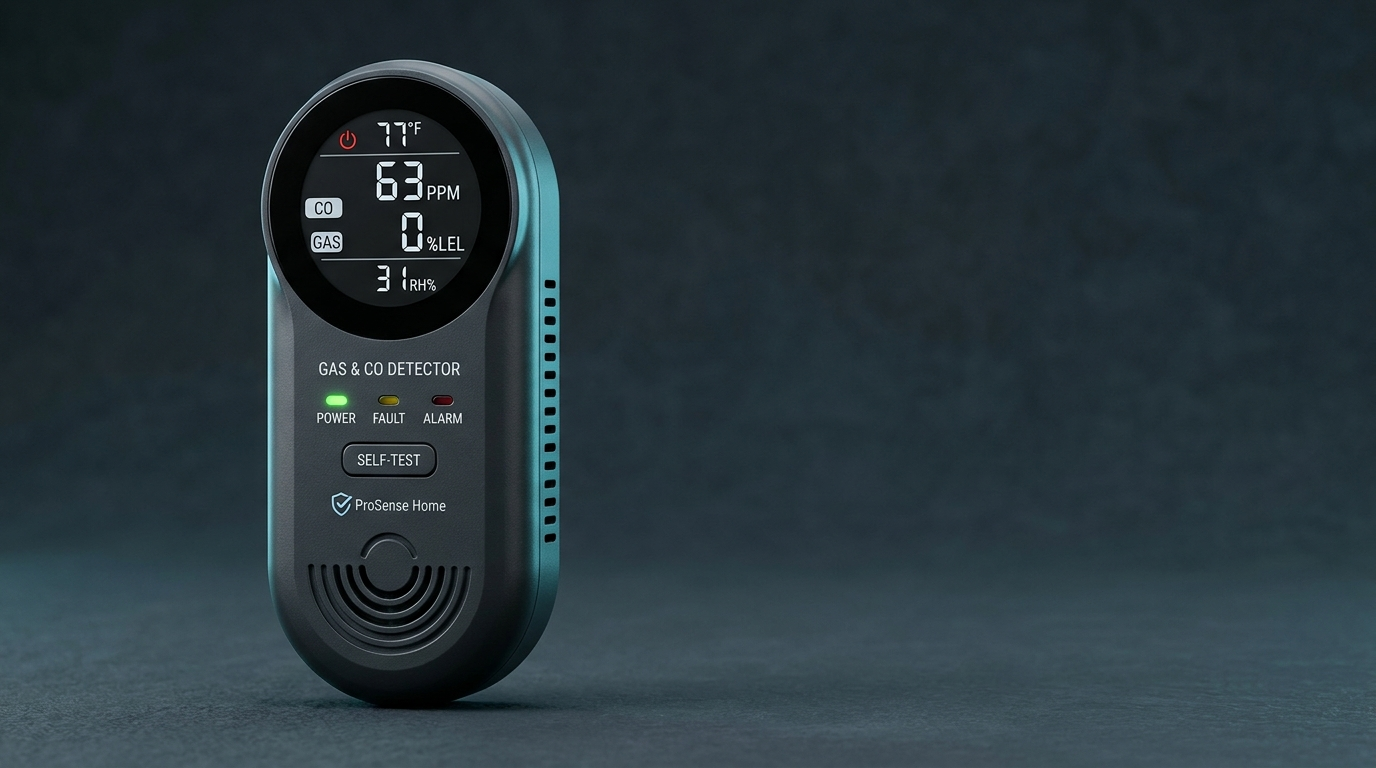
Plug it in tonight. See the air, every minute.
Lifetime warranty. Free US shipping. 90-day money-back if you don't trust it.
Order ProSense Home →ProSense Home Detector© is a registered safety device. UL 2034 listed for residential CO detection. Not a substitute for professional gas-system inspection. Always follow your RV's electrical and ventilation guidelines.