The 4 Carbon Monoxide Calls That Made A 14-Year Firefighter Build His Own Detector — And Why Every Standard Detector On Your Wall Is Legally Allowed To Stay Silent
— Mike T., Founder of ProSense Home · 14 Years FDNY
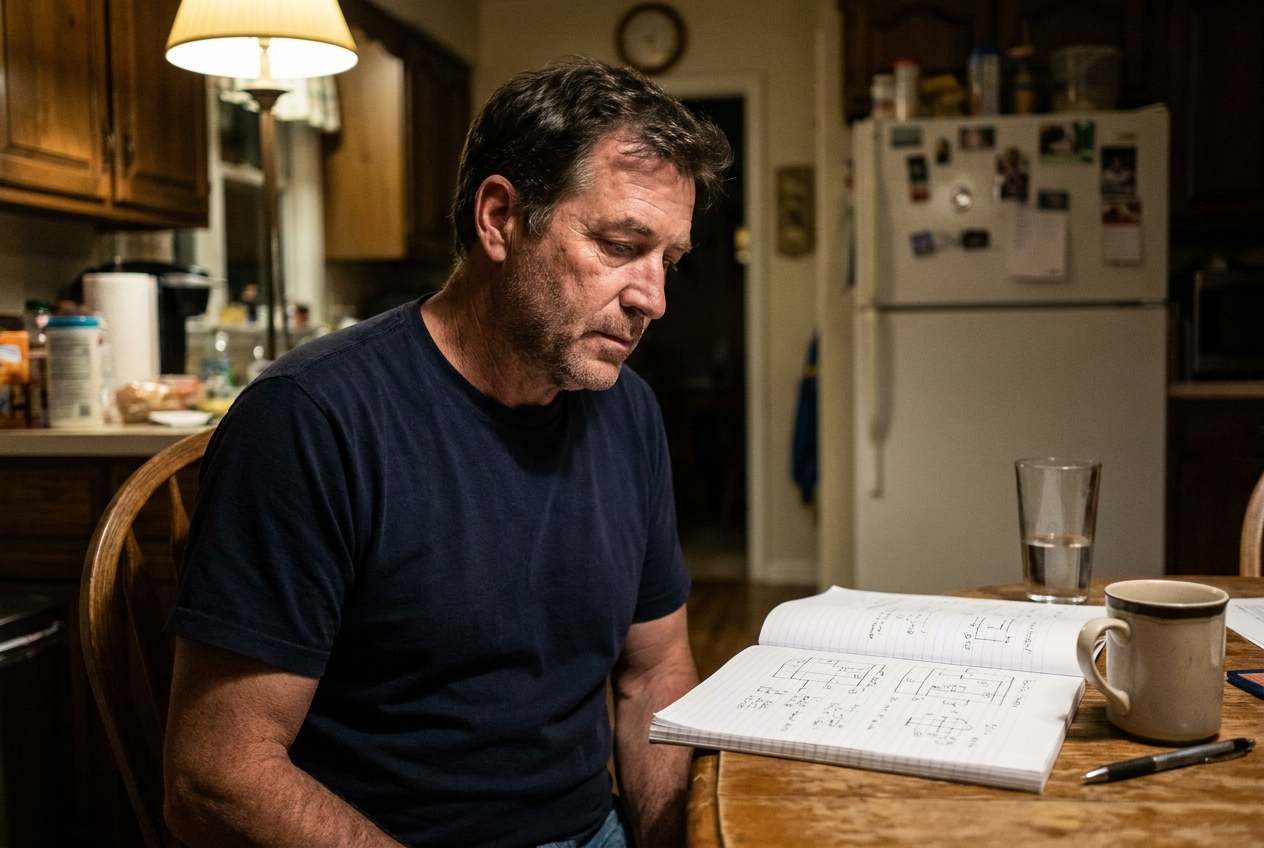
The Dispatch That Changed Everything
Fourteen years on the job. I thought I had seen all of it.
Structural fires. Industrial collapses. Cardiac arrests in living rooms. Domestic incidents you don't want to describe to anyone who hasn't been on the job. You name it — I'd worked it.
None of that prepared me for the radio call that came in at 3:47 AM on a Tuesday in January.
“Family of five. Suspected carbon monoxide exposure. EMS already rolling.”
We turned onto a quiet residential block in our district. Porch light still on. Front door hanging open.
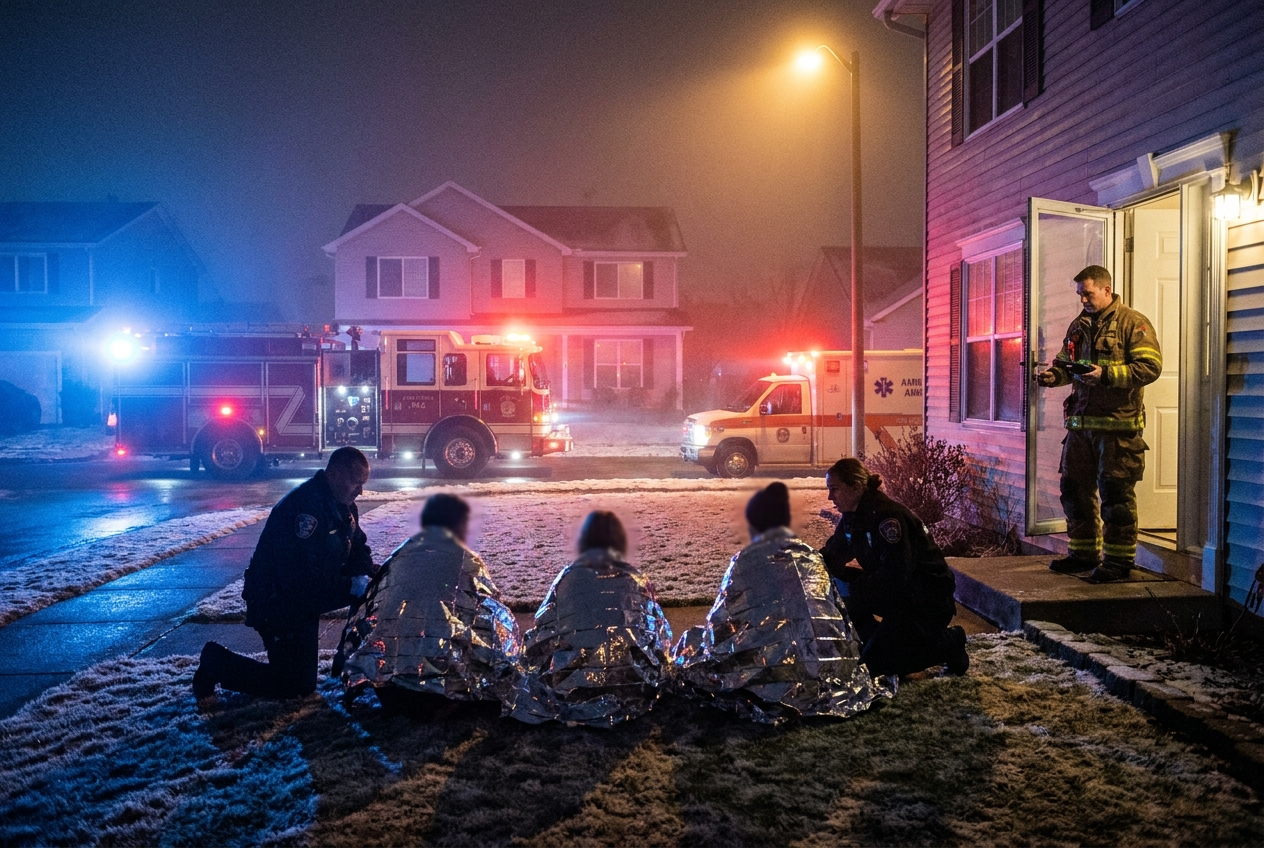
A man stood barefoot in the driveway. Three children huddled together on the curb. A woman doubled over in the grass.
Their neighbor was crouched beside them. She'd placed the call.
“Couldn't sleep,” she told me. “Saw them stumbling out the door. Knew something wasn't right.”
I pulled my monitor and stepped through the front door.
The numbers hit me before I reached the stairs.
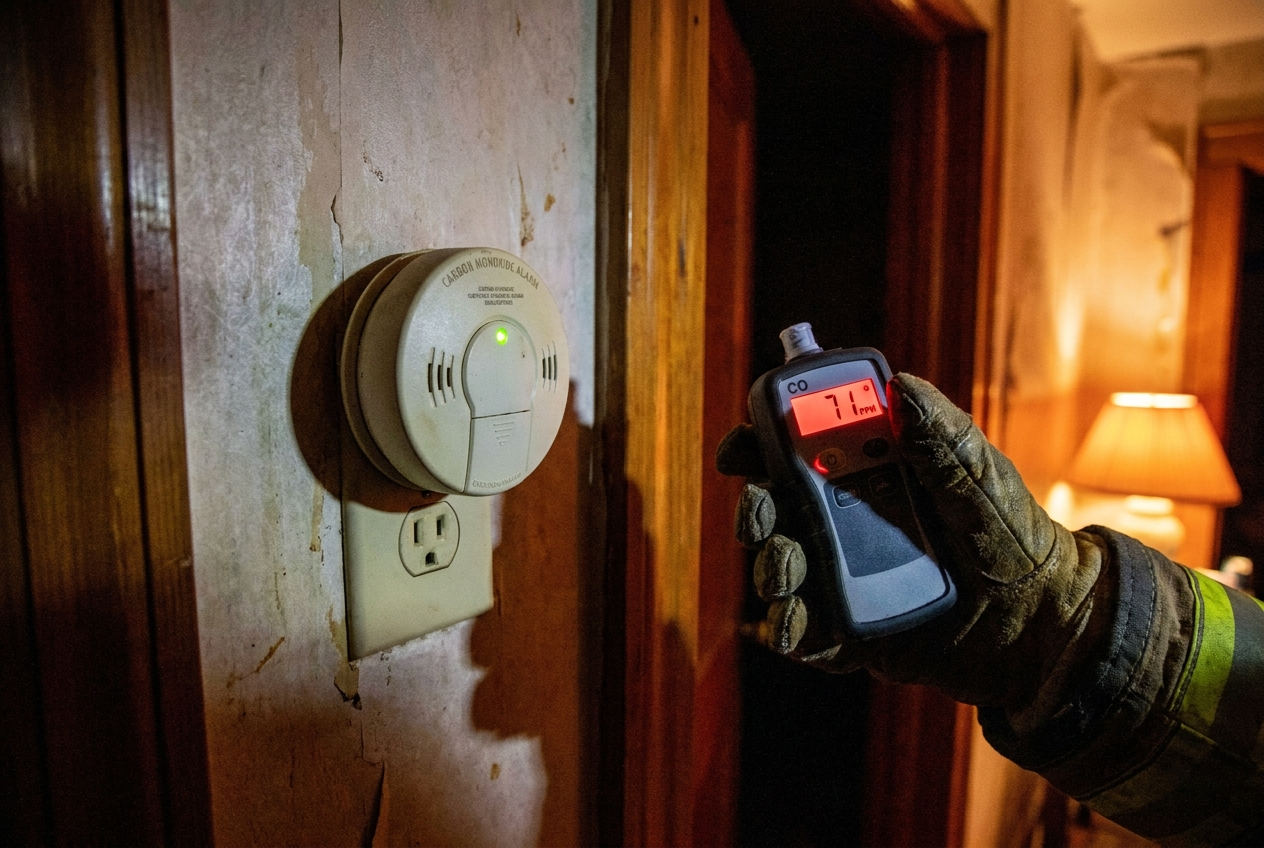
▸ 71 PPM — Master bedroom corridor
▸ 94 PPM — Basement mechanical room
This family had been sleeping in a gas chamber all night long.
“How Is That Even Possible?”
I walked back out to the driveway.
Paramedics were already fitting oxygen masks on the children. The mother was still nauseous. The father stood there pale-faced, eyes struggling to focus on me.
“How long were you asleep inside?” I asked.
“Put the kids to bed around nine,” he said. His speech was slurred. “I woke up maybe half an hour ago. Felt like the room was spinning.”
“You're fortunate to be standing here,” I told him. “Another ninety minutes and this is a body recovery, not a rescue.”
I went back inside to trace the leak.
Boiler room in the basement. Hairline fracture in the heat exchanger — almost invisible to the naked eye. Every ignition cycle was pumping CO straight into the ductwork and up through the entire house.
Textbook scenario.
But something stopped me cold in the second floor hallway.
A carbon monoxide detector. Mounted on the wall just above the outlet. Green light on. Steady. Calm.
I held my monitor up beside it. 71 PPM exactly where I was standing.
Not a sound from the device.
I pulled it off the wall and brought it outside.
The father's eyes locked onto it the moment he saw it in my hand.
“That's supposed to protect us,” he said. “Why did it just sit there and do nothing?”
I flipped it over and read the label.
Standard brand. Purchased the previous year. Sold in every hardware store in America.
“When did you get this?” I asked.
“About eight months ago. Got it before the kids moved in.”
“You test it regularly?”
“Every few weeks. Always beeps. Green light always comes back on.”
I held up my meter so he could read the numbers himself.
“This unit is functioning correctly. The battery is fine. The speaker works. The sensor is intact.”
“Then why didn't it wake us up?” he asked.
“Because it's engineered to stay silent until CO levels cross 70 parts per million.”
Silence.
“Your reading was 71 when we arrived. It was sitting right at the cutoff. The device was operating exactly as its manufacturer intended.”
“But we were being poisoned,” his wife said from the ground.
“I know.”
What I Said Next Made Them Go White
I looked over at their three kids wrapped in foil blankets on the curb. The oldest couldn't have been older than ten. The youngest was maybe three.
“By the time you're at 70 PPM, the damage has already started. You're not in the early stages — you're hours in. Headache. Nausea. Cognitive fog. Your kids have been breathing this since they closed their eyes tonight.”
I let that land.
“And that's a slow-build scenario. If the leak had accelerated and levels spiked faster, the detector might not have triggered until you were already too disoriented to stand up and get out.”
The father was still staring at the detector in my hand.
“We did what we were supposed to,” he said quietly. “We bought the detector. We checked it. We thought we were covered.”
“You're not the first family I've stood in a driveway with at 4 AM. And I knew right then you wouldn't be the last.”
The ambulance took all five of them. Hyperbaric oxygen treatment. Overnight monitoring. They made it.
3 AM — I Walked Through My Own House With A Monitor
I got home just before 4 in the morning.
My wife was asleep. My two daughters' bedroom doors were closed.
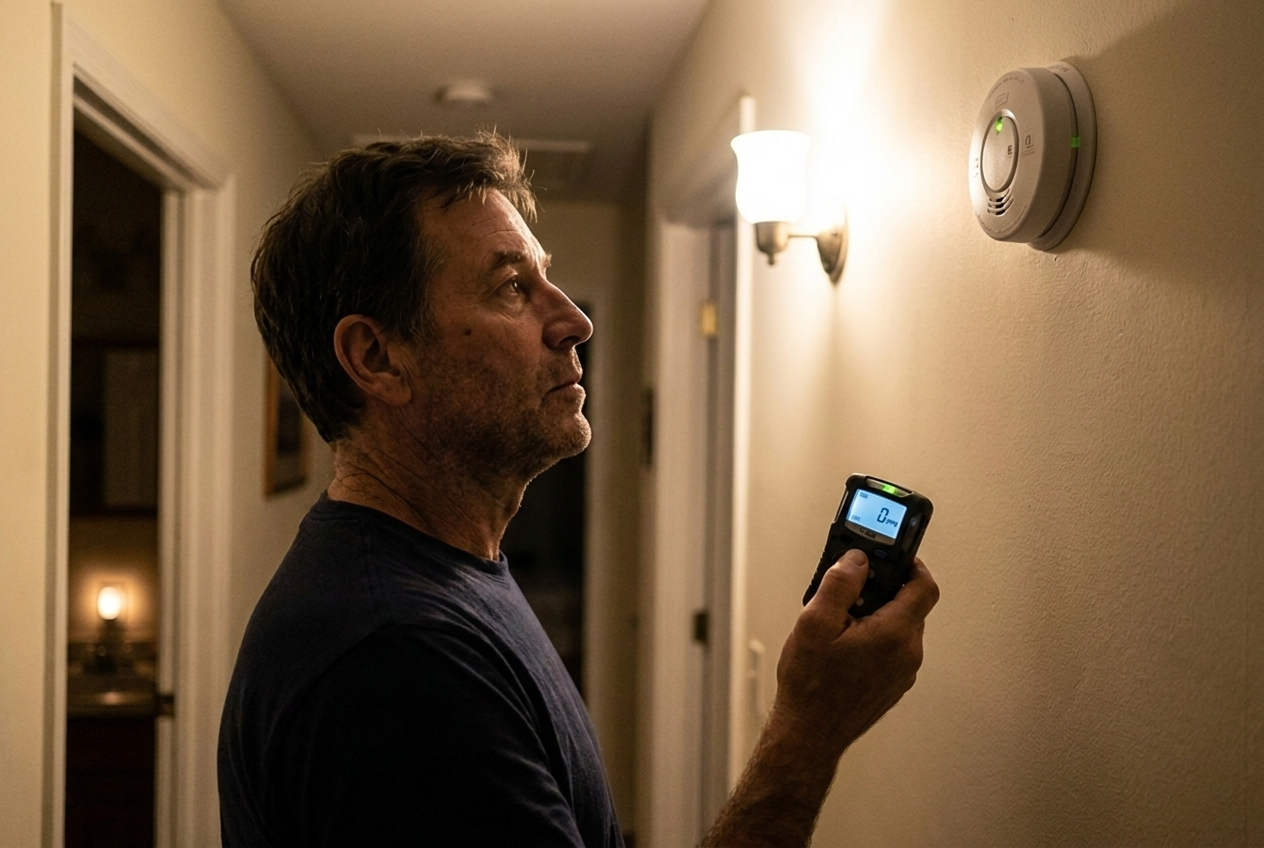
I stood in the upstairs hallway and stared at our CO detector.
Same kind of detector. Same design. Same unblinking green light.
I'd tested it three weeks earlier. It beeped. Light went green. I moved on.
I grabbed the meter from my bag and walked every room in the house.
0 PPM throughout. We were fine that night.
But as I stood there in the dark, something hit me that I couldn't shake.
If we had a leak tomorrow — if the levels climbed to 60 PPM, 65 PPM, while everyone was deep asleep — this detector would sit on the wall and say nothing. And we'd sleep right through it.
Exactly like that family.
The Standard That's Quietly Failing Families
I sat at my kitchen table until sunrise researching this.
Those standard detectors — the ones on every shelf at every hardware store in America, sitting in 90% of homes right now — they're built to pass a certification test.
Not to actually keep your family breathing.
The certification is called UL 2034. It was written in 1992. Never meaningfully updated.
The standard says they must alarm at 70 PPM within 60 to 240 minutes of exposure.
Seventy PPM. And they can legally wait up to four full hours before making any sound.
And below that threshold? At 30, 40, 50 PPM? Concentrations that are genuinely dangerous, especially to children, elderly people, and anyone with a respiratory condition?
Total silence. Zero requirement to respond.
It's not broken. It's not failing. It's working precisely as the law allows.
And that legal minimum is costing people their lives.
I closed my laptop at sunrise. My older daughter was waking up upstairs. I could hear her getting ready for school.
I knew that morning what I was going to do.
I Couldn't Sleep. So I Started Designing.
I'm not an engineer. I'm a firefighter.
But I had spent fourteen years walking into homes where the detector on the wall had failed the family inside it — not because it was broken, but because it had been built to a standard from 1992 that wasn't enough.
And I knew, from my own work monitor, that better was possible.
The handheld units we carry on the job show us the actual PPM level on a digital display. Live. From zero. We watch the number climb as we walk through a contaminated home. We know what's in the air before we get to the bedroom.
Why didn't every American home have that on the wall?
I called Kowalski, an old buddy from the academy whose father-in-law had been installing residential HVAC systems for 32 years. The professionals who actually watch furnaces crack every week. The men who knew what the green-light detectors were missing.
His father-in-law connected me with two electrical engineers and a sensor specialist who had retired from industrial gas monitoring.
We spent the next eighteen months in a workshop in my garage.
Prototype after prototype.
Testing the sensors against calibrated gas concentrations. Refining the display. Failing. Rebuilding. Testing again.
We weren't trying to make a fancy detector. We were trying to make the detector I wished had been on that family's wall.
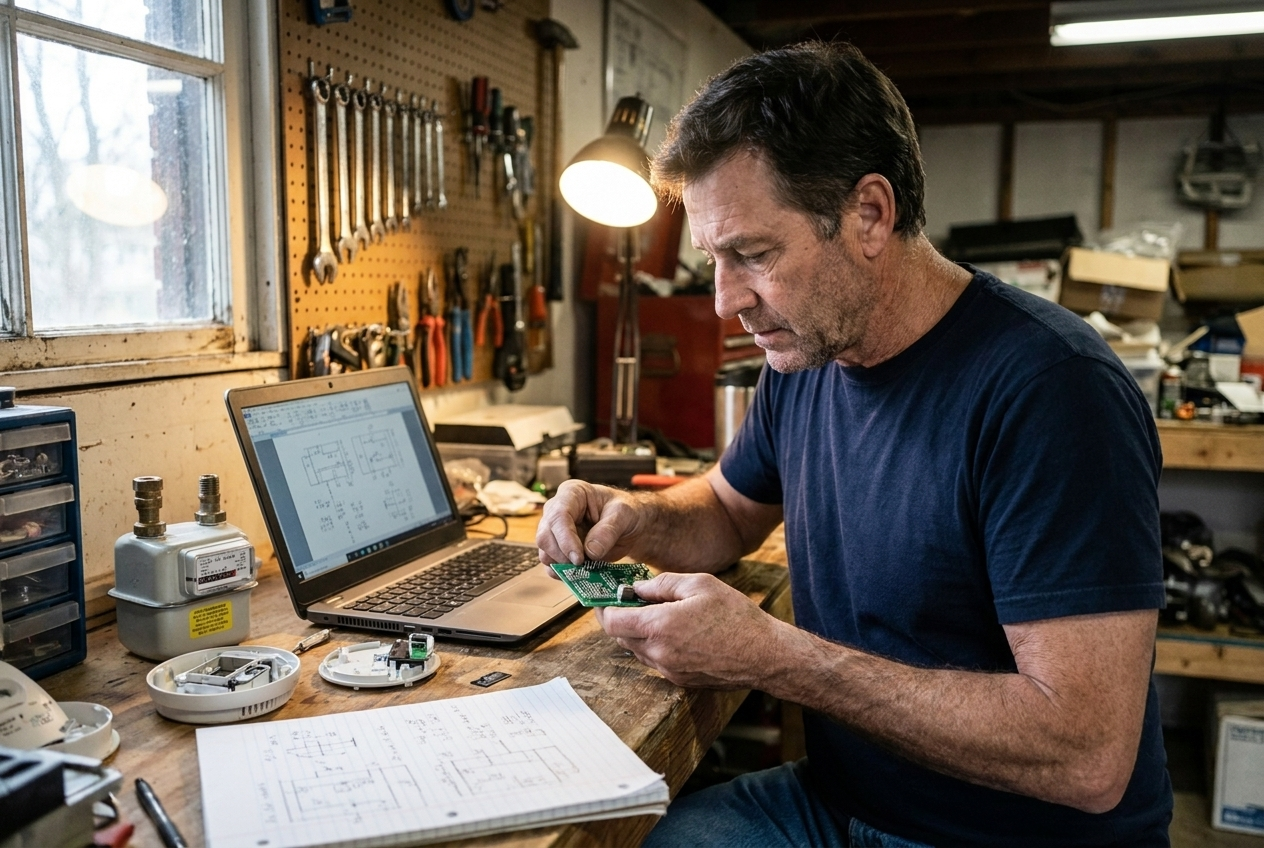
The Detector I Wish Had Been On That Family's Wall
What we built is called ProSense Home.
It's not a fancy detector. It's an honest one.
It has a live digital display showing the exact carbon monoxide concentration in your air at every moment. Visible from across the hallway. Updating in real time.
0 PPM when your air is clean. 5 PPM when there's a hint of combustion happening somewhere. 12 PPM when something is starting to fail. 30 PPM long before the silent green-light detector would consider making a sound.
You don't wait for an alarm. You read the air on the wall every morning. The same way you check the weather before deciding what to wear.
The first time my wife saw the display on our hallway wall reading “0 PPM”, she stood there for a moment.
“That's it?” she said. “That's all it takes?”
That's all it takes.
It detects both carbon monoxide and natural gas. It also displays the room temperature, because furnaces fail more often in temperature extremes. It's UL 2034 and ETL certified. And it works from the moment you plug it in.
I put one on every floor of my house. One in the utility room near the boiler. One in the kitchen near the gas range. One in each of my daughters' bedrooms.
Then I bought eight more and shipped four to my parents' home and four to my wife's mother.
That's why our most popular pack is the 8-pack. Adult children buy it. They split it between their own home and their parents'. It's the cheapest way to know that nobody you love is sleeping with a silent green light on the wall tonight.
For a limited time you can save up to 50% off when you purchase a multipack of ProSense Home
Cover your home + your parents' home in one order. Free shipping to multiple addresses.
 CHECK AVAILABILITY →
The First Customer Email That Made Me Cry
That was twenty months ago now.
ProSense Home shipped its first units six months after the prototype was finalized. I still went on shift. I still pulled my fourteen-hour days at the station. But my evenings and weekends went into shipping orders from my garage with my daughters helping pack the boxes.
Then one night in March, I got an email from a customer named Brian. He lived in Ohio with his wife and their seven-year-old daughter.
“Mike,” he wrote, “I plugged in my ProSense in my daughter's bedroom last night. The display read 47 PPM. The detector that had been on her wall for five years had stayed green the entire time. I called an HVAC tech this morning. The flue pipe from our water heater had partially disconnected behind the drywall. We had been breathing low-level carbon monoxide for months without knowing it.”
“My daughter has had headaches for weeks. We thought it was screen time. We thought it was school stress.”
“She's fine now. The HVAC tech said another month and it would have started doing permanent damage to her developing brain.”
“Thank you. I don't know what else to say. Thank you.”
I read the email three times. My wife found me at the kitchen table at midnight, still staring at my phone.
I'd built this product because I couldn't sleep after that January night.
Now Brian's daughter could sleep because of it.
That email is printed and pinned above my workshop bench. Every time I think about scaling back, about going back to just being a firefighter and shutting the company down, I read it again.
I've received hundreds of emails like Brian's since then.
Some of them are from grandparents whose adult children shipped them a ProSense. Some are from new parents who plugged one in the day their baby came home. Some are from people whose furnace cracked overnight and who watched the display climb from 0 PPM to 45 PPM and got their family out of the house at 5 AM before the standard detector would have made a single sound.
This isn't a product I designed to sell.
This is the device I wish had been on that family's wall in January.
Protect your home with ProSense Home
Click below to see if ProSense Home is still offering 50% savings and free shipping
CHECK AVAILABILITY →
If your detector right now only shows you a green light — not a real number on a screen — please plug in something better tonight. It doesn't have to be ours. It just has to be one that tells you the truth.
Stay safe.